BartBlog

December 4, 2010

Sadness: When “Plant a Tree for Israel” goes awry

Filed under: Uncategorized — Tags: , — Jane Stillwater @ 12:36 pm

It always saddens me when I hear about the destruction of human life and property for no reason. And I have been completely saddened and dismayed to learn about all the horrible wildfires that are currently tearing through northern Israel unchecked. These out-of-control blazes have destroyed up to one-eighth of the entire state of Israel so far — and with no end in sight. At last count, over 40 people have been killed and thousands more have been left homeless.

To me, it is particularly sad that the exact same trees that are now burning so intensely are the very same trees that were planted so many years ago during the extensive 1950s “Plant a Tree for Israel” campaign that allowed for the purchase of over 260 million trees. And each one of these trees may have been purchased with small, precious sums of money eagerly and hopefully donated by schoolboys and schoolgirls in America.

Each pine tree now in flames may have been purchased with some little boy’s allowance that he had saved up for weeks, months or years, or with some little girl’s birthday money or babysitting money or paper route money. (Hey, my sister had a paper route back in 1955 — girls did that kind of stuff too — just think of Rosie the Riveter!)

All these precious trees up in flames.

People and property needlessly destroyed.

This tragic loss also reminds me the tragic losses that have happened in southern Lebanon, Beirut, Jordan, Syria, the West Bank, Jenin, Hebron, Gaza, the Golan Heights, East Jerusalem, Iraq, Iran, Afghanistan and Manhattan.

It is always a sad tragedy and waste to humanity when people and property are needlessly destroyed.

PS:     I just got an e-mail from an expert in that area to the effect that I was being way too subtle here and that although things certainly have gone awry in Israel/Palestine recently, things in that area actually began to go awry far earlier than this current wildfire situation.

“Things first began to go awry in that area when the very first ‘Settler’ killed the very first Palestinian solely for his or her land.”

“And when was that?”

The expert who e-mailed me stated that this may have happened as far back as the 19th century — long before even the beginnings of all that horribleness began occurring in 20th-century Germany.

PPS: Here’s my account of having visited that area of northern Israel back in 2006:

Today we drove up into northern Israel, to see the remains of a Palestinian village that had been destroyed by the Israeli army approximately 60 years ago. As we drove along the freeway toward the Lebanese border, we passed a McDonalds sign. And a sign for KFC. It reminded me of when I used to take my children on trips. They would see a McDonalds and say, “Are we there yet?”

Finally we arrived in a relatively large Israeli city near the Lebanon border. Mostly it seemed to consist of miles and miles of strip malls. The best of American architecture! I felt right at home. Then we drove out through the countryside on the far side of the city and then up into the mountains, finally arriving at a hilltop somewhere near the Lebanese border. Lots of trees. Nice view. “Oh, look! There’s a cow.” There was a bunch of cows.

We arrived at the site of the former Palestinian village, apparently one of 450 Palestinian villages destroyed at the time. But I couldn’t see nothing but trees and grass and cows.

“Some of the original inhabitants of the village will be meeting us here,” said the Israeli man I had driven up with. He, like many other Israelis, strongly objected to the drunken use of force by the IDF and he, like many other Israelis, has made a point of learning some of the true history of what had gone on way back then. When he had offered to bring me here, I had jumped at the chance.

“This is one of over 500 Palestinian villages that were destroyed by the Israeli army back around 1948-49.” Wow. They certainly did a good job on this one! There was nothing left but stones — and cows.

“All record of what the Palestinians call the Nakba — the catastrophe — are absent from Israeli school curricula, from most history and geography books and even from maps of Israel itself. The sites of the old Palestinian villages have even been erased and re-named on all of the maps. And even today there is no official Israeli recognition or commemoration — let alone apology — for the Nakba.”

We got out and walked around the land where the village used to be. There was nothing left. Just a lot of scattered stones. Another bunch of cows appeared as we walked down a dirt road. Photo op! Except that these cows had horns. Big horns. Lots of horns.

“In the Zionist collective memory,” continued my Israeli friend, “the Palestine of 1948 was a ‘A land without people for a people without a land’. Yet the place where Israel was founded was never empty. This was home to almost one million Palestinians living in over 700 villages and cities, most of which were depopulated and re-named in the period during and immediately following 1948.” Now all there was here was cows. And cow poop. Opps.

It was a peaceful afternoon in the country. We walked up the path to the top of another hill. Terrific view — almost like the Sierra foothills near Auburn and the California gold rush country up before you get to Lake Tahoe. “Here is an old fortress that was bombed by the Israeli air force back in 1949. 99% of the houses were still standing in 1950 but the Israeli army returned and blew up everything that was left. You are now standing on the site of the elementary school and the high school. The village used to make its living by growing bees and harvesting honey.” Not any more. Nothing was left. It looked like even the bees had left town.

“And here is the Muslim cemetery and across the road is the Christian cemetery, dating back from the time of the Crusades.” Now a small stone building was all that was left. “It used to be the minister’s home. For hundreds of years, Muslims and Christians had lived — mostly — in peace in this village. And over there was the village pool and the village green.”

On that day in 1950 when the rest of the villagers had been driven away by the occupying Israeli army, one family had been down in the fields during the seizure and occupation of the village. “When they came back and one of their boys had a wound that he had gotten while farming, the Israeli soldiers said that it must have come from resisting the invasion so the soldiers tortured him and killed him. His parents were too scared to even come out of the trees in order to collect his body. The rest of the surviving villagers had run and hidden in their olive orchards but after a few days without food, two old men went back to the village to try to get supplies from their homes. They were shot.”

The Israeli army wanted to hide any evidence of destroying the village. “But they were stupid. They left all the stones.”

Then somehow we got into a discussion of eye-wear and I gave someone with me my famous “glasses as accessories” speech. “Nobody manufactures yellow glasses,” I lamented. “Do I have to do everything myself? Now I have to manufacture glasses too?”

Then we toddled off to what was left of the village church. I met an Arab-Israeli man there who was also touring the ruins and he told me his story. “My grandfather was a Palestinian and he had a very high regard for education. When I was a boy, he made each of his grandchildren learn a different language. Unfortunately I got stuck learning English,” he joked. “The others learned French, German, Spanish and Chinese.” Chinese? “Yes but unfortunately the only textbook he had was Chinese to English so he was forced to learn English too.”

Apparently when the Israeli soldiers stormed the village back in 1950, they confronted the headman, who was a Christian. “Why are you defending these Muslims,” the Israeli commander asked and the headman answered that, “in this one moment, we now are all belonging to the same religion — and it is God, not us, who will sort out who is good and who is bad.”

The air today smelled of pine trees. There were stone blocks everywhere. Thousands of them. One of the villagers who had survived the massacre and who had come back for the day spoke to us. “Every year since the Nakba, those of us who are left feel so empty inside. The horrible violence seemed so senseless. It has split our bodies and minds. Our bodies stand here 57 years later but our souls are still back in our village, so long ago, in this beautiful place. And no matter what the Israeli history books say, this village did once exist.” That man survived. And he remembers.

“We thought at first that we might be allowed to come back to our village,” said the man. Who could blame him. This place was — and is — beautiful. “Other villages took us in but then they too were destroyed. But we will never give up our dream of someday coming back here, back to our home.”

Apparently after 1950, this village was declared to be a “military area” and so the villagers were never allowed to return. And even today, even with all the trees and the cows, this village is still labeled a “military zone”. The sun was beginning to set so we walked back to our car and drove back to Tel Aviv. And we didn’t stop by McDonalds for dinner on the way back.


100_2233

November 29, 2010

Hang ‘em High?: Tariq Aziz & other war criminals I have known

Filed under: Uncategorized — Tags: , , — Jane Stillwater @ 3:28 pm

Is this really a good time to be sentencing former Iraqi diplomat Tariq Aziz to death — especially when WikiLeaks has just exposed a whole bunch of the dirty laundry stuffed into America’s and Britain’s diplomatic pouches regarding their “Coalition of the Willing” and its underhanded role in initiating and sustaining a brutal and unnecessary war on Iraq?

“But everyone knows that Aziz worked for Saddam Hussein and Hussein gassed the Kurds,” you might argue, “and Aziz was also found guilty of condoning torture.” Like I said, be careful about pointing your finger on that one. It could very easily boomerang back to hit certain American and British leaders in the arse. How many hundreds of thousands of Iraqis have been “gassed,” tortured and killed due to American and British failed diplomacy? According to Information Clearing House, the current number is 1,421,933.

And speaking of executing former leaders such as Aziz, do we really want to hang former Congolese vice-president Jean-Pierre Bemba because he didn’t stop his troops from killing all those women and children in the Central African Republic? If we do that, don’t we also have to take a look at all the women and children who have been killed in Afghanistan by American and British troops too?

“Jane, just exactly where are you going with this?” I don’t know. But it just seems unfair to me that Tariq Aziz and Jean-Pierre Bemba both face hanging while George W. Bush gets to go on talk shows and actually brag about how he approved torture.

PS: Speaking of war criminals, according to professor Paul Larudee in an article recently published in “Redress,” http://www.redress.cc/palestine/plarudee20101123, whole bunches of Israeli security guys are currently madly scurrying around all across the internet, frantically trying to block the publication of a document that names 200 alleged Israeli war criminals.

“When unknown elements in Israel leaked the name, rank, identification number and other information about two hundred Israeli military personnel who reportedly participated in the 2008-2009 invasion of Gaza, the effect was sudden and profound, according to sources in Israel. Although the first site on which it appeared was taken down by the host, it has continued to circulate via email, and has appeared on at least one other site, http://s242816488.onlinehome.us/criminals/. The Israeli military and other Israeli agencies are reportedly doing all they can to shut down every site on which it appears, and to prevent it from ‘going viral.’ At least one popular blog that links to the site has received a record number of death threats.”

Why has this list of only “alleged” war criminals seem to have gotten so many of Israel’s muckety-mucks’ knickers in a twist? Let’s find out. According to Larudee, “The publication of the list of two hundred changes everything. The list contains the names of a few high-ranking officers, but many of those named are in the lower ranks, all the way down to sergeant. The effect is to make ordinary Israelis concerned that they, too, may be subject to arrest abroad, and without the protection that well-connected higher officials might enjoy. They know what they have done, or been ordered to do, or have ordered others to do, and they suspect that they may be held accountable by foreign laws, over which their government has little control.”

And there are other ramifications here too. If Israeli soldiers as a whole can be held accountable by the international community for their actions in Gaza and the West Bank and for agreeing to serve in a trumped-up “war” that is against Geneva Conventions, then perhaps American troops can also be held accountable by the international community for agreeing to serve in those chaotic shambles that Bush, Cheney and Obama so cheerfully call the Afghan and Iraq “wars”.

PPS: World opinion is sometimes like a snake on a cold day. It moves slowly — but it does move. And while most western media has been working its butt off for the past one hundred-odd years to try to make war seem sexy — ever since Kaiser Wilhelm was first portrayed as a Hun back in 1914 — way down below all their continual bombardment by war hype over the past one hundred years, ordinary people everywhere are finally and at last getting truly sick of all this war, war and more war — no matter what the alleged justification for it may be.

100_1036

November 26, 2010

San Bruno revisited: A tragedy’s aftermath & a high school reunion

Filed under: Uncategorized — Tags: , , — Jane Stillwater @ 2:25 pm

I was totally miserable back when I was in high school — painfully shy, big-breasted at a time before implants, an outsider intimidated by a stupid social stratification system controlled by popular kids and cliques, unhappy at home and lost at school. Back in the 1950s, I was my school’s only beatnik. Hell, back then I was the whole town’s only beatnik. And based on this pathetic back-story, you can probably imagine how much I dreaded going to my 50th class reunion this fall. But I went.

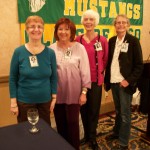
Screwing up my courage, I timidly entered the fancy hotel ballroom where our reunion was held, took one look at the tons of middle-aged people in leisure suits who I didn’t know, panicked completely and spent the next two hours hiding out in the computer room of the hotel’s business center. But then I finally got a grip and went back — and actually ended up having lots of fun hanging out with some members of my old Girl Scout troop. Not so bad after all. Thank you, Liane, Cecilia and Carol Sue!

But what (besides my old Girl Scout troop) really convinced me that this reunion — and even my miserable high school experience from 50 years ago — was actually not all that bad? It was when I considered the alternative. Yes, I could be dead. And, actually, a goodly percentage of my former 1960 classmates already are. Dead.

And even worse things than death could have happened to me too. “Worse things than death? Such as?” you might ask. I could have been horribly burned, maimed or torn limb from limb. “But how?” you might ask. Here’s how.

While I had actually been raised in Millbrae, a highly-conservative San Francisco bedroom community, the high school I attended was physically located in San Bruno — recent scene of one of the worst and most tragic fires in U.S. history, when a gas pipe suddenly exploded and decimated an entire community. Had I remained in the Millbrae-San Bruno area, perhaps I too would have lost all my worldly possessions in that horrible fire — or had major chunks of my skin burned off or been maimed for the rest of my life.

Here I am bitching about a bit of minor discomfort I might have suffered 50 years ago — while just recently many fire victims who lived near my school have just lost their homes, their families, major body parts and even their lives.

But I am proud to say that my Capuchino High School Class of 1960 has just collected over $5,000 to donate to the San Bruno Lions Club relief fund for these suffering families. And in appreciation, the San Bruno fire department recently hosted a dinner for some of our class members. We got to eat in the firehouse kitchen, take a tour of the “Fighting 51″ engine company’s firefighting equipment and were even given the opportunity to slide down the firehouse pole — yeah like I could actually do that kind of stuff any more.

“What was it like at the firehouse when you first got the 911 call?” I asked a fireman as he served me a generous helping of mashed potatoes and gravy.

“At first we thought a plane had crashed up there but then the fire burned too clearly to be caused by a crash. And the heat was intense. All we could do was encircle the fire, fight back the spreading fingers of flames, try to contain it and call in for backup — which we did. We had firefighters coming here to help all the way from Eureka.”

And now, three months later, these very same San Bruno firefighters were cooking us lamb chops and serving us dessert. I felt so honored.

“What’s happening up there at the site now?” I asked next.

“Eight people died from the fire and 37 were injured. And two of the survivors are still in hospital burn units,” he replied. Sigh. “And PG&E is currently trying to buy up the empty lots in that area and some of the residents are now trying to rebuild. However, some of the streets in that area are still closed and the crater caused by the explosion is still just a gaping hole in the ground.”

Most of the rest of the world has already pretty much forgotten the San Bruno catastrophe and moved on after just a few short months — on to the next media circus such as who was able to buy the most stuff on Black Friday. But for these heroic San Bruno firefighters who stood their ground against Hell itself, the memory of that tragic day will forever be engraved into their minds, hearts and souls.

I learned a lot at the “Fighting 51″ firehouse that night. I learned that the firefighters were really good cooks, that there are firewomen in San Bruno as well as firemen, and that it is time for me to stop whining and sniveling about how hard I had it back in high school. I have been one of the lucky ones. I too could have been dead — or scarred for life.

“When’s the next reunion!” I cried.

PS: Donations to fire victims can still be sent, care of the San Bruno Lions Club, P.O. Box 242, San Bruno, CA. 94066. Please write the word “Fire” in the memo section of your check. All money received will go directly to the fire victims.

Although mostly forgotten by the media in just a few short months, the victims and survivors of this tragedy still need all the help they can get.

PPS: Please bear in mind that many parts of Iraq and Afghanistan still look pretty much like this burned-out section of San Bruno, with new fires and explosions happening there every single day — no matter how many times George W. Bush tries to sugar-coat his actions on the Jay Leno show.

I know that I am lucky that I didn’t get caught in the San Bruno maelstrom. But do all of us Americans know how REALLY lucky we are that we don’t live in some war-torn country such as Afghanistan and Iraq, where terrible tragedy and horrendous damage like what happened in San Bruno is just another part of day-to-day life.

****
Wanna tour Afghanistan and/or Iraq? Here are the best ways to do it:

Afghans4Tommow has a wonderful program to help rebuild Afghanistan — you could donate to that too. And they also have a secure guesthouse in Kabul you could stay at, including meals, for $50 a night.
http://www.afghans4tomorrow.org/default.asp

Global Exchange is offering an outstanding package tour of Kabul in March 2011: http://www.globalexchange.org/tours/1078.html

Hinterland Travel can show you the historical sites and artifacts of Iraq, including the National Museum, Babylon and Ur: http://www.hinterlandtravel.com/

****

To see photos from the reunion and the firehouse, click here: http://jpstillwater.blogspot.com/2010/11/san-bruno-revisited-tragedys-aftermath.html

121_1760

November 24, 2010

TSA gone wild and National Opt Out Day spur heated public debate

Filed under: Uncategorized — Greg in cheeseland @ 4:01 pm

Author’s note: The National Opt Out Day appears to be causing no problems, which may say something about the docility of Americans. In fact, the only reason this issue may be getting media attention is because of a lot of media employees travel frequently and a few have been subjected to the searches. The article contains a video that is a compilation of media stories about the worst of the TSA abuses. I encourage you to check it out before you decide which side of this issue you are on.

Excerpt:
The Transportation Security Administration’s (TSA) newly-implemented enhanced search procedure is making headlines on the busiest travel day of the year and has spurred a national debate. Accounts of air travelers who have felt humiliated by airport screeners have been reported by mainstream media and have gone viral on the internet (see video).

On one side of the debate are those who feel that it is necessary to tolerate a “minor inconvenience” for safety and security. On the other hand, there are those who feel that the procedures are a health risk, an invasion of privacy, and an infringement of civil liberties that have little or no benefit in terms of flight security.

Officials say the procedures are necessary to ward off terror attacks like the attempted bombing of a Detroit-bound plane last Christmas by a Nigerian man who stashed explosives in his underwear. The TSA says the scans emit very low radiation and aren’t a health risk. “It’s all about security,” Homeland Security Secretary Janet Napolitano said. “It’s all about everybody recognizing their role.”

Many who oppose the new procedures say that security is not the issue. Scientists and physicians have warned that the scanners may cause cancer. A group of scientists at the University of California, San Francisco (UCSF) raised concerns about the “potential serious health risks” from the scanners in a letter sent to the White House Office of Science and Technology in April. “While the dose would be safe if it were distributed throughout the volume of the entire body, the dose to the skin may be dangerously high,” they wrote. Dr Michael Love, who runs an X-ray lab at the department of biophysics and biophysical chemistry at Johns Hopkins University school of medicine, said to Agence France Presse that “they say the risk is minimal, but statistically someone is going to get skin cancer from these X-rays.” Ironically, those most at risk are TSA employees, since they are repeatedly exposed to the radiation emitted from the use of these machines.

Kate Hanni, the founder of FlyersRights.org, argues that the scanners and pat downs are a violation of all Americans 4th Amendment rights against unreasonable search. Hanni also told the Huffington Post that former Homeland Security Secretary Michael Chertoff ‘s security consulting firm, The Chertoff Group, benefits from the sale of the scanners because they have helped Rapiscan – the manufacturer of the machines, navigate the government procurement process.

Reps. Ron Paul (R-TX) and Ted Poe (R-TX) seem to agree with Hanni’s assessment. Both introduced legislation and blasted Chertoff and the TSA on the House floor last week. “Michael Chertoff!” Paul exclaimed, “I mean, here’s the guy who was the head of the TSA, selling the equipment. And the equipment’s questionable. We don’t even know if it works, and it may well be dangerous to our health.” Rep. Poe claimed that Chertoff gave interviews touting the scanners while “getting paid” to sell them. “There is no evidence these new body scanners make us more secure. But there is evidence that former Homeland Security chief Michael Chertoff made money hawking these full body scanners.”

Some go as far as to argue that the scanners are ineffective and actually make air travelers less secure. Rafi Sela, a leading Israeli airport security expert, told the Canadian Parliament, “I don’t know why everybody is running to buy these expensive and useless machines. I can overcome the body scanners with enough explosives to bring down a Boeing 747. That’s why we haven’t put them in our airport,” Sela said, referring to Tel Aviv’s Ben Gurion International Airport, which has some of the toughest security in the world.

According to the UK Daily Mail, Tory MP Ben Wallace, who worked on the scanners at defense research organization QinetiQ before entering Parliament in 2005, said the machines would not have detected the type of explosives that “underwear” bomber Umar Farouk Abdulmutallab used in trying to mount his attack on Christmas Day. Alert passengers stopped the underwear bomber, the shoe bomber and stopped an airplane from striking the white house on September 11. If air travelers are lulled into a false sense of security, it can be argued that they may be less alert.

Read more, get links and video here: Orlando Independent Examiner

Protest the TSA: Go naked!

Filed under: Uncategorized — Tags: , , — Jane Stillwater @ 11:24 am

If the TSA really wants to see us naked that badly, let’s just help them along. The next time you go through airport security and they tell you that in order to be allowed on your flight, you MUST let them either pat you down intimately or view your “junk in the trunk” on the screen, be supportive of their demands in an even more efficient manner — just strip off all your clothes!

I’m thinking that nothing will make the TSA re-think its new barbaric strip-search-by-proxy procedure than the sight of hundreds of old guys and fat ladies standing around a big airport naked.

And while we’re on the subject of protests, I just read where many Europeans are planning to pull all of their savings out of EU banks on December 7, 2010 — in protest of how banks there have been routinely using and abusing their customers for fun and profit. We could do that here too — and put our savings into credit unions instead. Credit unions do what banks are SUPPOSED to do, but without screwing us over.

PS: It’s probably not a good idea to withdraw your money from a bank while naked however — if for no other reason than that America’s top ten big-box banks have already striped many of us of everything already.

100_2183

November 22, 2010

Ye Olde Scribe Presents: A “Love” Poem for TSA

Filed under: Uncategorized — Ye Olde Scribe @ 9:10 am

“What’s not to love? Except EVERYTHING.”

tsa_logo

A “Love” Poem for TSA

Where might they put a bomb?
Can we figure that?
Maybe in a hat
Maybe in their caged cat
Can we gut people who are fat?
(more…)

November 20, 2010

YOS Presents: Another Quote from the Quote Goat

Filed under: Uncategorized — Ye Olde Scribe @ 9:58 am

cool-cartoon-24047361

Poster jaapdenhaan commenting on the possibility of a Palin presidency @ guardian.co.uk-

The fulfillment of the Maya prophecy.

November 19, 2010

Afghans: Still on the edge of extinction?

Filed under: Uncategorized — Tags: , , — Jane Stillwater @ 11:50 pm

It’s hard to write about Afghanistan with any kind of accuracy because only approximately 7% of Americans even actually know where the place is — let alone know anything about what is actually going on there. I mean seriously. How many of us have taken the time to read about Afghanistan in Wikileaks or even USA Today? And how many of us have even actually been there? It’s not as if Afghanistan was Hawaii or Cancun.

But I still want to write about Afghanistan anyway — even if it does mean having to do some actual research. But why would I want to do that? Easy answer there — because most of the taxes that Americans pay will eventually end up in Afghanistan, not Cancun. So let’s follow the money.

According to journalist Tom Engelhardt, “While Americans fight bitterly over whether the stimulus package for the domestic economy was too large or too small, few in the U.S. even notice that the American stimulus package in Kabul, Islamabad, Baghdad, and elsewhere in our embattled Raj is going great guns. Embassies the size of pyramids are still being built; military bases to stagger the imagination continue to be constructed; and nowhere, not even in Iraq, is it clear that Washington is committed to packing up its tents, abandoning its billion-dollar monuments, and coming home.”

And how is this huge tax investment in Afghanistan going? According to journalist Jeremy Scahill, it’s not going so good. “The US killing of civilians, combined with a widely held perception that the Afghan government exists only for facilitating the corruption of powerful warlords, drug dealers and war criminals, is producing a situation in which the Taliban and the Haqqani network are gaining support from the Pashtun heartland in communities that would not otherwise be backing them.” Good grief. No wonder nobody in America seems to want to know anything about what is happening in Afghanistan. It’s all just one big mess of bad news!

And, according to WaPo, even Afghanistan’s president is pissed off at the huge U.S. military presence there. “Karzai has long been publicly critical of civilian casualties at the hands of U.S. and NATO troops and has repeatedly called for curtailing night raids into Afghan homes. Under Petraeus and his predecessor, such raids by U.S. Special Operations troops have increased sharply, to about 200 a month, or six times the number being carried out 18 months ago, said a senior NATO military official, who requested anonymity so that he could speak candidly about the situation. These operations capture or kill their target 50 to 60 percent of the time, the official said.” That’s a whole freaking bunch of dead Afghans.

“Karzai said that he wanted American troops off the roads and out of Afghan homes and that the long-term presence of so many foreign soldiers would only worsen the war. His comments placed him at odds with U.S. commander Gen. David H. Petraeus, who has made capture-and-kill missions a central component of his counterinsurgency strategy, and who claims the 30,000 new troops have made substantial progress in beating back the insurgency.” http://www.washingtonpost.com/wp-dyn/content/article/2010/11/13/AR2010111304001.html?sid=ST2010111305091

But I did manage to locate some good news as well. Apparently if you can’t find a job in America, you can always get a hot new job in Afghanistan, working with the US/AID. Check this out. “Looking for a challenge? The U.S. Agency for International Development (USAID) is actively recruiting experienced officers to serve in Afghanistan. These are non-career Foreign Service Limited Appointments, for up to five years, requiring: Eight years of relevant experience, four of which must be overseas; Bachelor’s degree or higher; U.S. citizenship.” http://www.usaid.gov/locations/asia/countries/afghanistan/opportunities.html. And did you notice that bit about America (and you) being there for the next five years? So much for a quick end to that war.

“There are about 100,000 U.S. troops in Afghanistan [as of November 2010],” the Washington Post tells us. Talk about your job opportunities!

Next I read a book called “My Forbidden Face,” published back before Bush and Cheney started bombing the crap out of Afghanistan — back when the original “Taliban” were still in power in Kabul. Writing under the pseudonym of “Latifa,” its author vividly described how the Taliban back in the 1990s basically tried to kill off all of Afghanistan’s women — and apparently they almost succeeded. The Taliban imprisoned women in their homes, beat them with steel-tipped whips, hung them on gibbets in public, deprived them of all medical care, took away their jobs, starved them, raped them, mutilated them and did everything else that they possible could to make Afghan women extinct. Obviously the Taliban were not thinking ahead!

Without women to give birth to the next generation, all Afghans (not just Afghan women) faced the danger of becoming extinct.

And then the book’s author suggests that these brutal Taliban had been sponsored and financed by Pakistan — and that in fact many of the Taliban were even Pakistanis themselves.

Pakistan’s connection with the Taliban then got me to wondering how a small country like Pakistan could even afford to mount such an expensive campaign. The answer to that question lies in Washington too. I betcha dollars to donuts that most of the money to do this was pulled out of Pakistan’s deep pockets — pockets stuffed with American military aid.

And apparently, unlike the Taliban, Pakistan WAS thinking ahead. “Without all those pesky Afghans standing around and mucking it all up, the wealth of Afghanistan could be ours for the taking!” they apparently said to themselves — and started out on a campaign to annihilate Afghans in the above-stated manner, whether they were women or men (or even children). Then as more and more Afghans died, Pakistan happily started putting its plan into action by seizing the Afghan tribal lands next to their border, the area we now call “Af-Pak”. Yeah right.

“But Jane,” you might ask, “how does what happened back in the 1990s pertain to what is happening in Afghanistan today?” Good question. And since I couldn’t find an answer to that question anywhere else in my reading explorations, I’m going to have to make one up.

“If Pakistan thought it was such a hot idea to sponsor the Taliban before, then isn’t it like that they are probably sponsoring them again now?” Pakistan’s ploy to seize Afghan land worked for them before — so why change horses in mid-stream?

And what else has my research taught me? Hmmm. First Genghis Khan killed Afghans. Then the British killed Afghans. Then the Soviets and the Americans took turns killing Afghans. Then the Mujahideen killed Afghans. Then the Taliban killed Afghans. And Pakistanis killed Afghans. And now the Americans (and their allies from Europe and Canada) have jumped back into this hot game of “Let’s kill us some Afghans”.

Why is it that people from all over the freaking world seem so intent on killing Afghans? How come all of the players in this bloody game seem to be trying their level best to force Afghans into extinction? And you thought that the polar bears had it hard!

According to Jeremy Scahill, “The US strategy seems to be to force the Taliban to the table through a fierce killing campaign. According to the US military, over a ninety-day period this past summer, US and coalition Special Operations Forces killed or captured more than 2,900 ‘insurgents,’ with an estimated dozen killed a day.”

And if this new insurgence of Talibs is being sponsored by Pakistan too like the old one apparently was, wouldn’t it make sense to cut off all U.S. military aid to Pakistan and thus cut off the Hydra at its head?

But what if all U.S. military aid to Pakistan was to be suddenly cut off, Pakistan was then forced to stop back-dooring funds and money to the Taliban and as a result America finally began to get the upper hand in Kandahar and Helmand and finally started to win the longest freaking war in American history?

Would that mean that Americans would finally pack up their occupation and go home? Apparently not. Apparently Afghanistan serves as a buffer zone of influence between Russia, India, China and lord knows who else. Give up the Khyber Pass and the Oil (formerly Silk) Road? Not bloody likely.

Even if America does win its war against the Taliban (be they old or new) it will once again be the Afghans themselves (both men and women) who will lose because their country will still be occupied by Americans — and the Afghans, like the polar bears, will still be in danger of extinction.

I guess the main thing that i have learned from my research so far is that while everyone in the freaking world seems to be warring over this particular piece of the turf, it is the average Afghan who suffers.

PS: Here’s just one last piece of research that I did — running this essay past a friend of mine who is an expert on Afghanistan. And here’s his reply: “I don’t see any glaring errors per se in this article, Jane, but you might want to let readers know early on that while Latifa’s position might appeal to many Americans who still buy into the ‘Great White Saviors of Helpless Brown Women for Savage Brown Men’ concept because it is rather erotic and therefore difficult to unseat because it does not reside in the cerebrum but rather somewhere in the limbic system or reproductive glands, the same horrible things were being done to Afghan men as well as Afghan women during that time.” Check.

“And here are some further points your readers might not know about the 1990s Taliban: First, the Taliban beat both men AND women. They were focused on physical means of public discipline, like the Romans (and most historic cultures) were.

“Second, the Taliban were trying to restore order to a very chaotic situation. The U.S., Pakistan, the Saudis and the Iranians had all funded the mujahideen overthrow of the Najibullah regime, but the result by April 1992 was violent chaos. And the Taliban did succeed in restoring order where, since 2002, the combined U.S., ISAF and Afghan forces have failed to do so. Evidence: The Taliban could and did ban opium production in 2000.

“But while my comments mainly reinforce your points, those little factoids might still be a surprise, alas.” Yes, and it is also a surprise to me that the human race still hasn’t learned a better way to resolve conflicts than to resort to the old Roman (and caveman) tactics of violence and killing.

PPS: When I was in Kabul a few years ago, I met a whole bunch of REALLY NICE Afghans. And right at this very moment America, Canada, the Taliban, Pakistan, NATO, etc. aren’t just over there killing anonymous and nameless “Afghans”. They are killing real people who have families just like you and me and who are hard-working people who bleed when you hurt them and who are NICE.

In her recent book, “Peace Meals” ” war correspondent Anna B wrote about the real people, the innocent bystanders in Afghanistan who get killed in the wars. “We often dismiss the peopled landscapes of Afghanistan—and Iraq and Kashmir, Chechnya and Somalia—as merely a sere battleground of the global war against Islamist terrorism. We erect an emotional wall between ourselves and the millions of nameless, two-dimensional figures that move across our television screens, foreign and strange, almost cartoon-like, unsung. One goes up. One goes down. We switch to a different channel.”

I met Badkhen once at Camp Victory in Iraq, when we were roommates at Victory’s can city. Ever resourceful, she loaned me some masking tape so that I could repair a broken shoe strap. She looked just too young and innocent to be a hardened war veteran — but she was.

Badkhen states that, since the U.S. started keeping records in 2007 and the publication of her book, 7,324 Afghan civilians had died in the war. And a whole lot more of them have died due to lack of medical facilities, etc. “One in eight Afghan women dies during childbirth. One in four children dies before the age of 5, mostly of waterborne diseases. Only a third of Afghans have access to clean drinking water; fewer than one in 10 have access to sanitation facilities. Life expectancy, both for men and women, is 44 years.” Yet no one ever tallies these deaths that are directly related to war.

“‘Peace Meals’ is a tribute to all my host families who live, and perish, on the edges of the world. It is my invitation to connect with the ordinary people trapped in mass violence of the last decade in Afghanistan, Iraq and elsewhere in the Middle East and in East Africa; to break bread with them; and to peer past the looking glass of warfare led or backed by the United States into the lives of the people who, despite the violence and privation that kill their loved ones and decimate their towns, somehow, persevere. Even if they are not mentioned in the daily news feed, they have names.” http://www.truthdig.com/arts_culture/item/peace_meals_breaking_bread_with_wars_forgotten_families_20101104/

PPPPS: Afghans aren’t the only ones getting killed over there. Americans are too. Journalist David Pratt has this to say about that: “…More recently, just a few weeks ago in fact, I met a 22-year-old British marine called Ryan Gorman in Helmand, Afghanistan. As a sniper with 45 Commando, his mental snapshots were of a different kind. ‘Lots of the lads here when they fire back are shooting at shapes and blurs, but I could draw you a picture of the men I see, even the features on their faces.’ Being a sniper is not something Gorman likes to talk about when back home in East Kilbride. ‘Even my closest mates wouldn’t understand,’ he confides.

“But then just who, other than soldiers themselves, could ever be expected to understand such experiences? How many of us can honestly relate to what it must be like to watch a close friend die horribly in battle, or carry the psychological weight of having ‘confirmed kills’ attributed to you?” http://www.heraldscotland.com/understanding-generation-kill-1.830158

Who indeed?

100_1021

November 18, 2010

Lawmakers opposed to taxpayer-funded health care urged to forego theirs

Filed under: Uncategorized — Greg in cheeseland @ 6:55 pm

Author’s note: I am surprised “Bart” has not picked this up yet, so thought I’d post it here. I have not done political writing for the past few months, partly because I have been so disgusted with the shift to the right in this country recently, thanks to the Citizens United ruling that enables corporate fascists like the Koch brothers to throw unlimited amounts of money into elections and influence the useful idiot voters. Anyway, this article is a good taste of what is to come in the next two years.

Excerpt:
Rep. Joe Crowley (D-NY) began circulating a letter among his Democratic colleagues calling on members of Congress who want to repeal the new health care law to forego their own government health care plans.

According to Glenn Thrush writing for POLITICO, in the letter to House Minority Leader John Boehner (R-OH) and Senate Minority Leader Mitch McConnell (R-KY), Crowley writes:

If your conference wants to deny millions of Americans affordable health care, your members should walk that walk…You cannot enroll in the very kind of coverage that you want for yourselves, and then turn around and deny it to Americans who don’t happen to be Members of Congress…It is important for the American people to know whether the members of Congress and members-elect who have called for the repeal of health insurance reform are going to stand by their opposition by opting out of the care available to them at the expense of hard-working taxpayers. We look forward to your response in the coming days about exactly how many of the members in the Republican conference will be declining their taxpayer-supported health benefits.

This particular Washington SNAFU was spurred by comments made by Representative-elect Andy Harris (R-MD) at an orientation meeting while discussing the government-subsidized health care benefits that are available to lawmakers.

Harris, who ran on a platform that included a promise to repeal President Obama’s health care reform law and resist “government-run or government-mandated insurance,” essentially asked why it will take 28 days for his government-run health care to go into effect. Based on a statement from an aide who was present at the meeting, POLITICO’s Thrush reported that Harris asked, “what will I do without 28 days of healthcare?” According to the aide, he then asked if he could purchase insurance from the government to cover the gap. In a statement to POLITICO, Harris’ spokeswoman Anna Nix admitted that he also said, “This is the only employer I’ve ever worked for where you don’t get coverage the first day you are employed.”

Harris, a 12-year Maryland state senator who is an anesthesiologist that practices at Johns Hopkins in Baltimore and several hospitals on the east coast, apparently is not aware that the vast majority of private health insurance plans offered through private employers do not begin coverage for 30-90 days. Moreover, he is obviously oblivious to the hypocrisy of any politician who opposes government-subsidized health care for those not fortunate enough to be elected to government service, yet accepts it for themselves.

Read more, get links and see a video of even Scarborough mocking Harris here: http://www.examiner.com/independent-in-madison/lawmakers-opposed-to-taxpayer-funded-health-care-urged-to-forgo-theirs

November 17, 2010

Ye Olde Scribe’s Links to Oblivion

Filed under: Uncategorized — Ye Olde Scribe @ 10:00 am

“What ‘hopey changey thing?’”

U.S. Envoy Secretly Offered Troops in Iraq after 2011

WASHINGTON, Nov 16, 2010 (IPS) – A special envoy from President Barack Obama raised the possibility in a secret meeting with senior Iraqi military and civilian officials in Baghdad Sep. 23 that his administration would leave more than 15,000 combat troops in Iraq after the 2011 deadline for U.S. withdrawal, according to a senior Iraqi intelligence official familiar with the details of the meeting.

LINK

November 11, 2010

Worker bees or locusts: The 6.8 billion people who currently live on our planet

Filed under: Uncategorized — Tags: , — Jane Stillwater @ 5:30 pm

Me and my granddaughter Mena were reading “The Lorax” last night for the 20th time (yes, I have no life) and, amazingly, way back in 1971 Dr. Seuss had already begun warning us about the dangers of over-manufacturing and over-population. “I am the Lorax,” he wrote. “I speak for the trees.” And then one day all the trees disappeared.

The Lorax had clearly warned all of us — way back in 1971. We have been warned.

And yet despite of this explicit warning that almost every child in America has heard at least twice since 1971, to this day America (and almost every other nation on the planet) still measures its national well-being by the standard of whether or not there’s been a growth in gross national product that year — how much each nation as produced and/or consumed.

Apparently it’s still very important to prove that we human beings are all good little worker bees.

But lately it just seems that all we are proving is that human beings make excellent locusts.

Do we really NEED all this stuff that we are still madly manufacturing?

And even if we do need it, can we afford it?

The devastation that human beings have created on our planet since beginning of the Industrial Revolution makes me think of locusts, not bees — unthinkingly swarming all over the Earth, madly gobbling up all that they see.

40 years ago, Dr. Seuss was right. And so was the Lorax.

And now, 40 years after our warning, who speaks for the trees now? And the oceans? And the land? Monsanto does. And Wall Street, the Pentagon, Wal-Mart and Fox News.

We’re screwed.

PS: Here’s the U.S. Census Bureau’s official population clock, http://www.census.gov/population/www/popclockus.html, now telling us that at this point in time there are 6,878,795,705 locusts, er, people now living on this planet — and all of them seem to be screaming, “More! More! More!” at the top of their lungs. But guess what, guys. There’s just not going to BE any more — once we locusts have completely stripped the place.

Just ask the Once-ler what that’s gonna be like.

PPS: One of the lawyers I used to work for always told me, “Whenever you make a demand on your opposition, always include both the date by which you expect this demand to be met and the negative consequences to your opponent if your demand is not met.” That sounds like good advice.

So how about this for a due-date and a consequence? “If every single one of the 6.8 billion of us humans (except for those who are currently living at absolute subsistence levels) doesn’t cut down his or her consumption of goods and materials by at least half before January 1, 2015, then we will suffer the dire and severe consequences of living on a planet that is occupied by locusts instead of by bees — and Dr. Seuss’s awful prediction will come true.”

“But, Jane,” you might say, while possibly wringing your hands, “how could we possibly ever do that?” Sure, it won’t be easy — but here’s a very excellent way to start: Just get rid of ALL television commercials that extort us to buy stuff. And let’s put this advertisement ban into effect within a year from today — or else locusts will start eating your children. And you.

****

To see photos of members of various branches of the Stillwater family tree and Mena reading “The Lorax,” click here: http://jpstillwater.blogspot.com/2010/11/worker-bees-or-locusts-6.html
hit-iraq

November 8, 2010

Ye Olde Scribe Presents: Pop’s Quiz!!!

Filed under: Uncategorized — Ye Olde Scribe @ 3:40 pm

pops-quiz

OK, New Kiddies on the Congressional Block, we have yet another, simple, one question quiz. We’ll make it easy, not that any of you are smart enough to pass anyway. The choices: true or false, and all are false. Get it? Ah, why the flibbertygiberts does Scribe even bother?

A. Your family, or your country, doesn’t have enough money. Things are tight. So you…

____1. Tell everyone to work less, make sure there’s less incoming. Got money coming in? Give it back! That will make everything better!
____2. Give money you don’t have to everyone else: especially the well to do. Borrow it from a loan shark or a country that doesn’t believe in freedom. Nazi. Communist.
____3. Spend, spend, spend on fighting your neighbors because you don’t like them, are suspicious that they might come after you; someday, maybe. Borrow to do that. From? See #2.

OK, boys and girls! Stop squabbling… as if that’s going to happen… and take the damn test. Behave while Scribe is gone. He really needs a goddamn drink. Or two. Or three. Or…

November 7, 2010

Tips from famous crime writers: Solving the mysteries of writing & righting

I love reading murder mysteries because they are like puzzles to be solved — and because, in these books, there are always wrongs to be righted and Justice to be served. And the constant efforts of murder-mystery heroes to identify and capture the bad guys fit right in with my own life-long passion for Justice, especially in politics. Who dun it? “Karl Rove!”

When I attended BoucherCon, a convention of mystery writers and mystery readers held in San Francisco recently, one facet of the conference that I really liked was when several famous murder-mystery authors spoke to us groundlings about how they went about writing their books. Here’s what I learned from the following authors:

EDDIE MULLER, San Francisco’s current Czar of Noir: “I wrote about 1940s San Francisco because I wanted to recapture a place that no longer exists. It was my father’s town and I wanted to live his life vicariously — World War II, Dashell Hammett, the Barbary Coast. My father was actually born in Golden Gate Park after the 1906 earthquake. This was a whole part of San Francisco that I never got to experience myself but only heard stories about.” And so he wanted to write some of those stories down before they got lost forever — that was his motivation to write. (My powerful original motivation for starting to write was that I was completely pissed off at George W. Bush for stealing the 2000 election. Now there is one who-dun-it that no one seems to want to solve.)

“My job is to make sure that the things of the past don’t disappear. I write in order to preserve this past for future generations. I write for five-year-olds. And, in addition, if you can possibly do as an adult the things that you loved to do as a six-year-old, you’ll be fine. And my best subject in elementary school was Show and Tell. You have to find something that you really want to write about. You become curious about a character and a time.” And also about how the events of the day shapes a character’s world.

“My publishers were very upset with me after a while because they wanted me to keep writing books like my first ones. But my passion had moved on.” You have to have passion about something in order to write well about it. “It’s very hard for me to just sit down and write about something. It’s got to have a visceral spark for me to do it — one where I can’t eat or sleep until I do it.”

Short stories are easier to write than novels, according to Muller. “That’s because novels have their finish lines way off in the distance. And talking your stories out is also part of the writing process. You need to try as hard as you can to make your characters distinctive. Dialog is always at the service of developing character — in every dialogue you should be able to distinguish who is talking by the tone of what they say, even without attributions such as ‘he said’ or ‘she said’.”

Muller also said that it was easier to write a novel if you do it a chapter at a time. “I always write little mini-novels, about 20 pages ahead of where I am, because I think you need to leave space for zig-zags. A writer, unlike a pilot who always flies from Point A to Point B, constantly needs to leave his comfort zone. Tell the story you want to tell, not just follow the formula. Don’t be afraid to get out of your comfort zone.

“In my novels, I’ve tried to reclaim the hard-bitten dialogues of the 1940s without turning them into parody. Newspaper reporters from that time knew how to relate the facts in the shortest time possible and it is this timing that I’m trying to reclaim. That’s how newsmen wrote back then.”

Muller loved the old newspaper days. “There is nothing more impressive than an old-time newspaper office. The cacophony and urgency of those old newsrooms is gone. My dad worked for William Randolph Hearst and I myself took a job at the Chronicle because I wanted to be there when that behemoth went down. Now no one even goes to the office any more. Work is done at home. The Chronicle is still being published today but it’s just not the same. The romance is gone.

“Face it. Romance happens when people interact. And that just doesn’t happen any more. Everything now is done at home. Bars and theaters and public places are where people interact.” Now people just use the internet and rent videos.

“Always remember that It’s not how you spend your money that is important — it’s how you spend your time.”

Then Muller defined the “Noir” concept for us newbees. “In true Noir, it’s when fate is indifferent and the protagonist knows that he is doing wrong — and does it anyway. He has a tendency to self-destruct. Noir makes you feel the anxiety and despair of these people who knowingly do wrong. Thus Noir can happen anywhere. It doesn’t just happen in the Tenderloin. It also happens in the nicest part of town.”

DAVID BALDACCI: As a lawyer, I did the same thing that I did later as a writer — tell a story. It’s all about words. You do the research and then you tell the story. Transitioning between being a lawyer and being a writer was smooth. And your reader is like your jury.” I agree. I used to write personal injury settlement briefs — which is just like writing soap opera.

“I do a lot of research but don’t use 99% of it. Then after you have all the points down, you shorten it. Your final product should be all muscle, no fat. If it doesn’t describe a character or advance the plot, take it out. Distill it down to the best stuff — from 100 pages down to one paragraph if need be. But you still need to do the research.” I myself hate research — but Baldacci apparently thrives on it.

“One time I went out on a police patrol doing research and the policeman busted five criminals. And I swear this happened. As one of the criminals was lying there on the ground in handcuffs, he looked up at me and said, ‘I love your books!’ It really happened.”

When Baldacci was a lawyer, he saw a lot of justice not being done. “All of my books are about seeking justice. Sometimes my characters find it and sometimes they don’t.”

And none of Baldacci’s heroes are perfect — just as none of his villains are totally bad. “My villains can rationalize any behavior they commit. They are not a part of society so why should they care about society? And while 99% of us have a societal inhibitor that prevents us from acting on our feelings, some of us don’t. Look at Ted Bundy. His brain was just freaky. But most other villains are motivated because they have been left out of society.” Yeah, like most of Americans have been left out of the global corporatists’ grand schemes for MY country. But does that make us villains too? Hopefully not.

“My brain is always going on stories. You can’t turn it off — always thinking about writing. Even now. It’s absolutely never turned off. Wherever you go, whoever you meet, it’s all fodder for stories.”

Regarding inspiration, “The spectacular ideas, the Eureka moments, the epiphanies don’t happen often. I get ideas and extrapolate on them and distill and increase them so they will amount to a 400-page novel that someone other than your mother will read.”

Regarding many writers’ lack of self-confidence, Baldacci was hopeful. “I’m still fearful about my abilities, but that is a great combatant to complacency. Every book I write is like my first one. If you do this, you write a better book. But all people in the creative business have to have a high level of confidence. To put yourself out there to strangers is hard. Who do you write for? Your readers? No. I write for myself — not what sells, not what’s hot. I ask myself, ‘Do I want to spend a year of my life with this? Is this stuff cool?’”

Baldacci’s latest book is called “Hell’s Corner” and it’s about his regular group of characters, the Camel Club. “And it’s all smoke and mirrors, which is what Washington DC is all about. It’s my tip of the hat to DC.” Baldacci also talked about his favorite charitable project — trying to get more books into the homes of poor children.

LAURIE R. KING: “Sherlock Holmes is a terribly useful guy [for juicing up a plot]. I got about two lines into my first Mary Russell book and thought, ‘Oh crap. I really should learn more about Holmes.’” And apparently she did. I love king’s series about Mary keeping bees with Sherlock and later becoming his wife.

“I first sat down to write when my son had just gone off to pre-school for three glorious days a week. I wrote my first book on paper, typed it up and sent it off. Publishers’ reaction? Silence. I was such an ignoramus when I first started submitting manuscripts. I didn’t have an agent. Many publishers don’t take unsolicited manuscripts. I sent the thing out to publishers for three years with no luck, and then the Linda Allen agency took me on and I started selling manuscripts — but it only took me six years from writing my first book to its publication.” And it’s even rougher now to find a publisher than it was back then.

Sometimes readers stop and ask, “Would a character really do that?” Apparently books that have too many weird things happening in them usually don’t work. But the Mary Russell series certainly does.

JOSEPH FINDER: “My standards for what I write have grown higher over the years. Unfortunately, however, my skills have remained the same — except that now I have a better sense of structure and a better idea of what I’m trying to do. And being a published author now and doing all that it entails takes away from my writing time.”

Regarding having a book turned into a movie, Finder said, “I’ve sold a number of books to Hollywood that never got made into films. In Hollywood, writers are so low on the totem pole that they are below the ground. One time I tried to get an acting part in my movie [like Hitchcock did] and that was really strange. In Hollywood, they have a false respect for novelists but they mistrust us. Once, someone actually told me that I didn’t understand what my own novel was even about. They leave out all the good novelistic stuff in my books there, so now I just write what I think they will cut out. First they buy the script. Then they laugh at it. I don’t need that.”

And Finder actually likes to do research for his novels too. “When writers go to a place to do research, we go with heightened senses. But research is a dangerous drug for me. I love research. It’s like heroin. I start out with insecurity, knowing not much. And what you learn, you can’t show it off — it’s only the tip of the iceberg of what finally ends up going into the book.” I hate research.

“I read Robert Ludlum and John Forsythe when I was just starting out. I read a whole bunch of different thrillers. As writers, we start out imitating someone else and then we find our own voice.”

But Finder doesn’t waste his time writing on subjects that are familiar to him. “I hate the advice, ‘Write what you know.’ That’s crap. I always write what I want to find out. And someone said, ‘Suspense is undermined by humor.’ Screw that. I want to write what I want to write. Write what you like to write. If it clicks in the marketplace, that’s a plus. If publishers don’t like it, too bad.” Totally!

“The biggest struggle is actually just sitting down to write. But you have to keep writing because once you get into it, it’s really wonderful. I wish someone had told me that the first book is not the end-all and be-all. Just keep writing! But I still fear the empty document screen. Just shut everything else off and write. But if you get blocked, just take a look at your outline the night before, sleep on it and work on it in the morning.”

I’ve heard that before — that our brains sort stuff out for us in our sleep and we do our best creative work when we first wake up in the morning because our brains have already done most of the dirty work for us while we slept.

ANDREW KLAVAN: At first I wasn’t going to review Klavan’s suggestions on writing because I didn’t agree with his politics. However I have changed my mind about that. Why? Because of something that some guy I correspond with on the internet said recently. Internet Guy and I have such completely polar opposite views about how America should be run that, frankly, I almost hate him. I mean really! Teabaggers like him have just sold out our country to foreign interests and global corporations solely because the Supreme Court decision regarding Citizens United now allows our former democracy to go to the highest bidder — whoever can pay for the most libelous and mendacious campaign ads. But I digress.

Anyway, I thought I would NEVER have anything in common with Internet Guy, who I considered to be a completely ignorant schmuck, a willing victim of corporate brainwashing — but then I suddenly discovered that he and I were both murder-mystery fans! So maybe Internet Guy isn’t such a dumby after all (except for in politics of course, where he is clueless). And so perhaps I should give Klavan a chance too.

“I like screenwriting because it gets me out of the house,” said Klavan. “Writing novels is a lonely business — but I still love writing them. But the results of writing for Hollywood are so random. Sometimes they are good, sometimes bad.”

Klavan’s influences? “Raymond Chandler. He is the portrait of what a man should be like. And when I was 19, I read ‘Crime and Punishment’ and it changed my life. Someone just said of my latest book, ‘It’s like Chandler meets Dostoevsky.’ And I started out with no mentors, just walking around New York City with a manuscript box under my arm, literally getting thrown out of publishing offices.” Apparently this is the story of every writer’s life.

“One of the dangers of writing is that other stuff that you need to do keeps creeping in and grabbing up you time. I’ve been setting aside four hours a day to write since I was 14. And I still have to do that.”

MARTIN CRUZ SMITH: This man is one of my favorite writers — him and Janet Evanovich. “Writing is harder for me these days. It seems like everything interrupts me now. There’s either too much noise — or else too much quiet.”

Regarding Hollywood? “Hollywood has a technique that is debasing. It’s like you have a raincoat, they take it, jump up and down on it and throw it in the gutter. After that, do you really want it back? One main actor even apologized to me for what they did to my book.”

Regarding research? We have to evoke Donald Rumsfeld when we write — we have to know what we don’t know. The key to a good research interview is to just listen. Let it flow. I went to Russia to write and Moscow was such a fantastic city that I had to throw away my planned American character for a Russian one.”

Smith was most influenced by “The Spy Who Came In From the Cold,” and James Caan is his favorite American writer. “You have to find those tiny little bits of detail that come together and make the character come to life. My advice is to don’t listen to anyone else, just write. Write until your butt is sore. Stay home from those writers’ conferences and just write.”

And as a writer, you have to be hyper-aware. “A pitcher sees only home plate — but a writer see everything. And you put everything into your book.” And then you go out and look for a publisher — and press your luck.

LEE CHILD: He was at the convention too, mingling. Unlike some other writers, Child seems to like mingling with his fans. I saw him in the hotel lobby. He’s really tall. But I missed his presentation because I was off babysitting Mena the Kid. However, I am now reading his books and trying to catch up on his hero Jack Reacher, the impossibly perfect man, almost an American version of James Bond.

Lately I’ve been reading a lot of international-spy-ring, CIA assassination, testosterone-laced who-dun-it types of murder mysteries, as a result of learning about them (and getting free copies of them) at BoucherCon — and also because I’m still trying to figure out what is REALLY going on in that clandestine American nether-world of black ops, assassinations, skulduggery and unaccountability that most of us Americans know nothing about — but still have to pay for. And this type of mystery writer lets us in on the ground floor of what is really going on behind all those closed doors. And it ain’t pretty. Or democratic. Or American. But Karl Rove would definitely approve.

****

To see photos of the murder-mystery authors and Clifford the Big Red Dog giving Mena an interview, click here: http://jpstillwater.blogspot.com/2010/11/tips-from-famous-crime-writers-solving.html

121_1767

November 3, 2010

Getting used to the new reality: Cheap Labor

Filed under: Uncategorized — Tags: , , , — Jane Stillwater @ 12:10 pm

This past election hasn’t been about protesting undocumented aliens who work for cheap.

This past election has been about getting YOU to work for cheap instead.

What are you going to do when the new Republican majority in Congress votes to eliminate Social Security, cut jobs, raise taxes and screw you (again) on both Wall Street and Main Street? You’re going to start looking for any kind of job you can get — any kind of income, any kind of salary, any kind of work.

And this past election also wasn’t about Repubs winning because they tinkered with our electronic voting machines either. Sure, those evil electronic voting machines may have stolen your votes once again — but does it really matter what happened if almost no one in America protests?

Americans voted with their feet in Florida in 2000 and in Ohio in 2004, when they accepted documented fraudulent voting results without hardly a whimper. Almost no one in America protested getting mugged by Diebold. “God bless President Bush,” they cried instead, as Republicans drove your jobs overseas, vacuumed out your savings accounts and foreclosed on your homes.

Every time Americans allow Republicans to take control of our country, it’s almost as if you are actually crying out, “Cut our salaries! Steal our pensions! Outsource our jobs! We WANT to be your new and convenient source of cheap labor!”

And Americans are getting what they appear to want really badly — the right to replace undocumented aliens with themselves.

(Photo is of me and one of my daughters posing in an old chair back in 1976 and looking very Dorthea Lange.  If the Repubs have their way, we’re going to get a chance to look that way again — but for real.  Sigh.)

ruby-1

October 30, 2010

Jane & Mena’s big adventure: Our recent visit to Hello Kitty!

Filed under: Uncategorized — Tags: , , , , — Jane Stillwater @ 2:30 pm

Sometimes you just gotta take a break from observing the ever-present world stage of human tragedy and go out and have fun! So last week me and my two-year-old granddaughter Mena went over to San Francisco to see Hello Kitty celebrate her 50th birthday. According to a recent 7-Live newscast, this event was to take place on Justin Herman Plaza at 1 pm, and consisted of a mobile Hello Kitty store, some free gift bags and an opportunity to get your photo taken with Hello Kitty herself!

So we popped onto the BART train and took off.

Was the event crowded? Yes it was. We got there two hours early and there were already at least 200 people standing in line. One woman said that she had left her house that morning at 6 am so that she would be sure to get a gift bag. And everyone there was a huge Hello Kitty fan!

Demographics? Most of the fans there were adults — many of whom have loved Hello Kitty since childhood. And why not — what’s not to love? Guilty pleasure — I love Hello Kitty too. Many Japanese-Americans and Japanese turned out for the event. And most fans were women. Me too. And so was Hello Kitty!

The prices of things for sale at the mobile store were a bit on the expensive side. A commemorative T-shirt was $35, a small plastic coin purse was $12. Small stuffed animals were $28. Plus it took forever to get waited on.

However, a good time was had by all and we made lots of instant friends while waiting in line to get our photos taken with Miss Kitty. “But what about the gift bags?” you might ask. Only 50 of them were given out, plus they gave the first 50 arrivals a number (written on their hands) so that there would be no cutting in line. Rats. But I did get a sneak peek at the gift bags even though we had arrived too late to actually score, and they contained stickers, a note pad, a pencil and a small coin purse. I want one!

The Hello Kitty “Small Gifts” 50th-birthday mobile tour was a really fun event, mostly because of all the enthusiastic fans that we met — but also because we got to actually get our photos taken with a real, life-sized Hello Kitty. And she even patted young Mena on the head.

Moral of the story? Even a hardened reporter like myself can still succumb to “cute” — and that advertisers and promoters still have us where they want us.

PS: Mena went as a witch for Halloween this year — which reminds me of all the female Tea Party candidates who have been circling like sharks churning the waters during this election cycle: Sarah Palin, Meg Whitman, Christine O’Donnell, Carly Fiorina, Michelle Bachmann, etc. Remember back in the day when we women would have been honored and pleased to have so many female candidates running for federal office? I surely don’t feel that way now.

PPS: Speaking of honor, Glasgow Sunday Herald war correspondent David Pratt has just written a very moving article entitled “There is never an argument to defend the use of torture”. Pratt himself was tortured when he was reporting from Bosnia back in 1995.

“The gunmen who took me prisoner claimed to be Croatian militiamen, but were, in reality, little more than thugs and gangsters,” wrote Pratt. “During my short captivity, along with other civilian prisoners, I was bound and beaten with rifle butts before being singled out one night to be shot. To this day, I’ve never really been able to figure out what then followed – a mock execution or simply a case of my captors, who were drunk at this point – making a cock-up of trying to kill me.

“The last I remember of that night, was kneeling with my hands tied behind my back looking down into a ditch where others lay twisted and lifeless. Then there was the sound of a pistol being cocked before being put to the back of my head. A second later, there was an empty click and some mocking laughter before a thump on the back of my neck sent me to oblivion into the ditch where I later regained consciousness lying alone among a heap of bodies.”

The point that Pratt goes on to make is this: “At the end of the day, real democracies don’t do torture. In today’s war on terror, far from being a necessary evil, torture is plain evil: a morally reprehensible act that is in itself is a form of terrorism.

“No matter how much we try to justify it as a means to an end, in fighting today’s war on terror, it simply can never be so. Those states that advocate its use are little better than those morally bankrupt thugs at whose hands I, along with countless others, suffered in Bosnia all those years ago.

“As the French Algerian author, Albert Camus, eloquently put it: ‘Torture has perhaps saved some, at the expense of honor…even when accepted in the interest of realism and efficacy, such a flouting of honor serves no purpose but to degrade our country in her own eyes and abroad.’”
http://www.heraldscotland.com/comment/guest-commentary/there-is-never-an-argument-to-defend-the-use-of-torture-1.1064650

121_1957

October 28, 2010

“What’s a Kos?”: Write about Palestine & get libeled & banned

Filed under: Uncategorized — Tags: , , , — Jane Stillwater @ 1:08 pm

“What’s a Kos?”: Write about Palestine & get libeled & banned

Last night I had been complaining bitterly to a friend because I had written a diary entry on the Daily Kos regarding injustice in Palestine and had gotten brutally libeled and then banned as a result.

“How come it’s completely acceptable to write diaries on the Kos regarding injustice in America and everywhere else in the world — but if you write about injustices happening in Palestine, you get libeled and banned.”

My friend just looked at me in confusion. “What’s a Kos?” he replied.

Well that certainly put things into perspective.

“The Daily Kos is a liberal internet website with over a million readers. It’s famous.”

“Never heard of it,” said my friend. Whew.

PS: Here’s a link to that diary entry that got me banned: http://www.dailykos.com/story/2010/10/26/913726/-Palestinethe-Daily-Kos:-Dog-whistles-Or-Google-Alerts. Scroll down and read some of the libelous comments attached to it if you want an instructive lesson on why requesting justice in Palestine may be very detrimental to your health. I get called crazy, nutty, silly, a conspiracy theorist, antisemitic, a piece of [dookie], hateful, whacked-out, loony, unhinged, etc. And someone even accused me of having twigs in my hair. Twigs in my hair? What kind of intellectual rebuttal is that?

These are the kind of almost-scary sleazy comments about me that I get all the time from various sleazy right-wing bloggers. But I certainly didn’t expect anything like this kind of nastiness to be dumped over my head by the readers of the Daily Kos, purported to be a liberal blog with excellent progressive creds.

The Kos even has a weekly column that relates some of the libelous wingnut comments that have been sent to its editor. Perhaps the Kos might consider putting some of its own readers’ libelous comments about me in that column.

And why didn’t the Kos ban some of its more offensive commenters — instead of just banning ME?

PPS: Here’s a quote from an article from the New York Times entitled “Smothered by Settlements,” regarding injustice in Palestine. How come the Times gets to write about injustice in Palestine without getting libeled or banned — but I don’t!

“….The only way to save the two-state solution is for the Palestinians to declare the establishment of an independent Palestinian state on the territories occupied by Israel in 1967, including East Jerusalem, and to demand that the world community recognize it and its borders — as it did in the case of Kosovo.

“That would also mean supporting the right of Palestinians to struggle nonviolently to end the occupation of their state. Any future negotiations, therefore, would not be about the right of the Palestinians to have their own sovereign independent state, but rather about how to apply and implement that right.

This would be the true test of the state-building strategy of the United States and the donor community. It would be the real instrument to finally demarcate the difference between support for free Palestinian institutions in a sovereign and viable state, or footing the bill of occupation and using E.U. and U.S. tax dollars to maintain under various guises what will never amount to anything but an apartheid system denying Palestinians their human and national rights.

“If the world community turns its back on such a declaration of independence by using the well-worn and insulting argument that every step should first be verified with the Israeli government, then the message will be clear: Peace based on two states is no longer an option.”http://www.nytimes.com/2010/10/15/opinion/15iht-edbarghouti.html?_r=1&ref=global

PPPS: Here’s what Reuters reports regarding injustice in Palestine.  Now we need to ban Reuters too?

“A senior U.N. official condemned attacks by Jewish ‘settler extremists’ on Palestinians’ olive trees in the occupied West Bank and called on Israel to ‘combat violence and terror by Israelis.’ Robert Serry, U.N. special coordinator for the Middle East peace process, also said he was alarmed that work had started on hundreds of new homes for settlers in the occupied territory since the end of Israel’s settlement freeze last month.

“Serry was speaking to journalists on Tuesday while olive-picking with Palestinian Prime Minister Salam Fayyad in the village of Tormos Ayya north of Ramallah. He said settlers had destroyed hundreds of trees in the village in recent weeks. Palestinians began harvesting olives across the West Bank this month. ‘I am appalled at acts of destruction of olive trees and farmlands, desecration of mosques and violence against civilians,’ Serry said. http://alertnet.org/thenews/newsdesk/LDE69P1NK.htm

100_0490

(Photo is of one of the highly-recommended protective measures you might consider taking if you are planning to write on the Kos regarding injustice in Palestine.)

« Newer PostsOlder Posts »

Powered by WordPress